
Dental laser
OfficeDent medical teamUpdated:

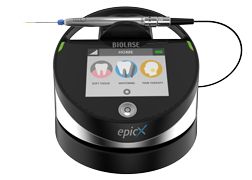
Laser dental treatment is the most modern in dentistry, being a non-invasive technique that is extremely precise, fast and, very importantly, completely painless. The EPIC™ X Biolase dental laser significantly reduces bleeding in non-surgical periodontal therapy and shortens the post-procedure recovery period, ensuring high treatment success rates.
Non-surgical periodontal therapy is the careful subgingival cleaning of the roots of the teeth to remove plaque and tartar from deep periodontal pockets, thereby smoothing the root and removing bacterial toxins.
The Biolase Epic dental laser is the most advanced device in the field and complements non-surgical periodontal therapy with multiple advantages:
- a strong bactericidal effect that effectively reduces subgingival bacterial cultures
- loosens the bond between the tartar and the tooth, thus helping to remove tartar
- vaporizes granulomatous tissue
- improves adhesion of fibroblasts to the root
- helps the gums reattach
- promotes bone formation
The diode laser specifically targets unhealthy gum tissue. Laser energy is well absorbed by melanin, haemoglobin and other chromophores that are present in periodontal disease. Laser treatments offer benefits that help heal the chronic inflammatory response in periodontal pockets. This intervention works well in treating mild to moderate periodontitis. Patients can be treated in a minimally invasive way, without surgery.
As the name suggests, the Biolase laser can also be used as a biostimulator, speeding up healing, relieving pain, stimulating collagen production and having a general anti-inflammatory effect.
Other articles

Intraoral scanner
The Sirona CEREC intraoral scanner replaces traditional impressions with a 3D digital scan, for precise dental work that can sometimes be done the same day.

Dental veneers
Dental veneers correct the colour, shape and small position defects of your teeth. When they're used, and how long they last: 15 years on average.

Dental fillings
What a dental filling is, when you need one, and how porcelain inlays and onlays compare with composite resin fillings.